
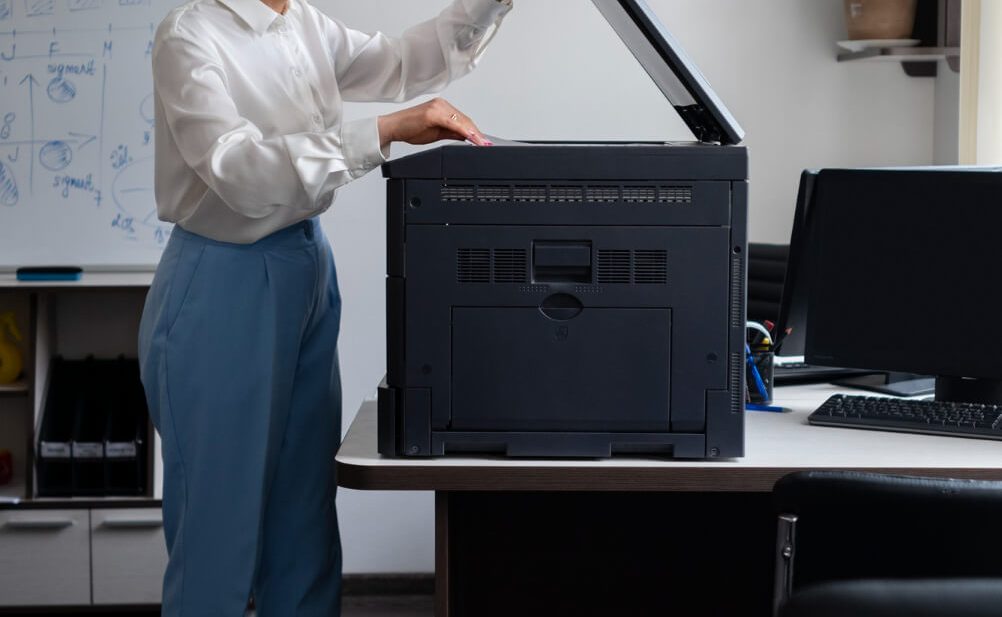
If you’re researching office equipment for your South African business, you’ve likely encountered the term “MFD printer” and wondered what sets it apart from a regular printer. MFD stands for Multi-Function Device, though you might also see these machines referred to as MFPs (Multi-Function Printers or Products) or all-in-one printers. Essentially, an MFD printer combines multiple office functions into a single piece of equipment, typically including printing, copying, scanning, and faxing capabilities.
Instead of purchasing and maintaining separate devices for each function, a quality MFD consolidates everything into one efficient workstation.
The Evolution of Office Printing
To appreciate what makes MFD printers valuable, it helps to understand how office document handling has evolved.
Twenty years ago, South African offices typically maintained separate devices: a laser printer for document output, a photocopier for duplicating documents, a standalone scanner for digitising paperwork, and a fax machine for transmitting documents. Each device required its own space, power connection, network connection, and maintenance contract.
This approach was inefficient, expensive, and complicated. Different devices meant multiple service contracts, varying consumables inventories, and staff needing to move between machines to complete simple tasks. The MFD copier concept emerged to address these pain points by integrating all these functions into a single, cohesive system.
Modern MFD printers from brands like Sharp and Canon have evolved far beyond simple consolidation. Today’s devices incorporate advanced features like cloud connectivity, mobile printing, robust security features, automated workflows, and intelligent document management that weren’t possible with separate legacy devices.
Core Functions of an MFD Printer
Understanding the primary capabilities of an MFD office printer helps clarify why these devices have become standard equipment in businesses across South Africa.
- Printing remains the fundamental function. MFD printers handle everything from simple text documents to complex colour marketing materials. Speed varies from 20 pages per minute in entry-level models to 70+ pages per minute in high-volume office machines. Print quality has reached the point where most business users cannot distinguish MFD output from dedicated high-end printers.
- Copying functionality replicates the traditional photocopier experience but with enhanced capabilities. Modern MFDs can reduce or enlarge documents, produce double-sided copies automatically, collate multi-page documents, and adjust image quality dynamically. Unlike older copiers that required warming up, today’s MFDs are typically ready to copy within seconds of activation.
- Scanning has become increasingly important as businesses digitise their operations to comply with regulations, reduce physical storage needs, and enable remote work. MFDs scan to email, network folders, cloud storage services like OneDrive or Google Drive, and USB drives. Advanced models include automatic document feeders that can process 50-100 pages unattended, dramatically reducing the time required to digitise large document sets.
- Faxing, while less common than it once was, remains necessary for certain industries and legal requirements in South Africa. Medical practices, legal firms, and financial institutions often still need fax capability for compliance purposes. Having this function integrated into your MFD means you don’t need a separate fax line and machine for occasional use.
The Advantages of Wireless Connectivity
The rise of the MFD wireless printer has transformed how South African businesses interact with their printing infrastructure. Wireless connectivity eliminates the need for every computer to be physically connected to the printer via USB cables, offering several compelling benefits.
Mobile printing capabilities allow staff to print directly from smartphones and tablets using technologies like Apple AirPrint, Google Cloud Print, or manufacturer-specific apps. This is particularly valuable for sales teams who need to print proposals while meeting with clients, or executives who want to print documents while travelling between offices.
Flexible placement becomes possible when you’re not constrained by network cable runs. You can position your MFD where it makes the most operational sense—near the teams that use it most frequently—rather than where the network infrastructure dictates.
Guest printing is simplified in environments where clients or contractors need occasional printing access. Instead of connecting them to your wired network, you can provide wireless printing access without compromising network security.
However, wireless functionality shouldn’t be your only connectivity option. Most MFD wireless printers also include wired Ethernet connections, which provide more reliable performance for high-volume printing environments and eliminate potential wireless interference issues.
Choosing the Right MFD for Your Business
Selecting an appropriate MFD printer requires understanding your specific business needs and usage patterns. South African businesses should consider several factors when evaluating options.
- Volume requirements significantly influence which MFD is appropriate. Entry-level models might handle 1,000-3,000 pages monthly, suitable for small businesses with light printing needs. Mid-range devices accommodate 3,000-10,000 pages monthly, ideal for growing companies. High-volume office machines handle 10,000-50,000+ pages monthly for large organisations or businesses with intensive document production requirements.
- Colour versus monochrome represents another key decision. Colour MFDs cost more to purchase and operate, but are essential for businesses that produce marketing materials, presentations, or customer-facing documents where visual impact matters. Monochrome devices offer lower running costs and faster speeds, making them ideal for document-heavy environments where colour isn’t necessary.
- Speed specifications matter more than many businesses initially realise. While a 25-page-per-minute printer might seem adequate, in practice, slower devices create bottlenecks as staff queue to collect print jobs. For offices with 10+ users, investing in a faster device (40+ ppm) improves productivity and reduces frustration.
- Paper handling capabilities affect daily workflow efficiency. Consider whether you need multiple paper trays for letterhead and plain paper, duplex printing for reducing paper consumption, speciality media handling for envelopes or cardstock, and high-capacity trays to minimise refilling frequency.
- Security features have become critical as cybersecurity threats increase. Quality MFDs include secure print release requiring PIN codes before documents print, hard drive encryption to protect stored documents, user authentication to track who uses the device, and network security to prevent unauthorised access.
Total Cost of Ownership Considerations
The purchase price of an MFD office printer represents only part of your total investment. South African businesses should evaluate the complete cost of ownership over the device’s expected lifespan, typically 3-5 years.
- Consumables costs vary dramatically between models and manufacturers. Toner or ink cartridges might cost anywhere from R500 to R5,000+ depending on capacity and whether you use genuine or compatible supplies. Calculate the cost-per-page, which reveals the true operating expense more accurately than cartridge prices alone. Monochrome laser MFDs typically cost R0.15-0.40 per page, while colour costs R0.80-2.50 per page depending on coverage.
- Maintenance and service contracts ensure your MFD remains operational and productive. Most businesses in South Africa opt for comprehensive service agreements that include regular maintenance, parts replacement, and priority service response. These contracts typically cost 8-15% of the device purchase price annually but provide budget certainty and minimise downtime.
- Energy consumption affects your electricity bill and environmental footprint. Modern MFDs include energy-saving modes that dramatically reduce power consumption during idle periods. Given South Africa’s electricity costs and load shedding challenges, energy efficiency shouldn’t be overlooked when comparing models.
- Supplies inventory and management require consideration. Having replacement toner available prevents disruptions, but stocking excessive supplies ties up cash. Devices with higher-capacity consumables reduce the frequency of replacements and the inventory you need to maintain.
MFD Printers and Modern Workplace Workflows
Beyond basic printing and copying, contemporary MFDs enable sophisticated document workflows that improve business efficiency. Scan-to-email functionality allows staff to digitize documents and instantly share them with colleagues or clients without needing to scan to a computer first, then attach to an email separately.
Scan-to-folder capabilities automatically route scanned documents to designated network locations based on document type, making information organisation automatic rather than manual. A receptionist might scan invoices that automatically appear in the accounting department’s folder, or contracts that route to the legal team’s repository.
OCR (Optical Character Recognition) built into many MFDs converts scanned documents into searchable, editable text rather than just image files. This transforms paper documents into usable digital information that can be searched, edited, and processed by other software systems.
Cloud integration connects MFDs directly to services like OneDrive, SharePoint, Google Drive, and Dropbox, enabling businesses to digitise and store documents in cloud repositories without computer intermediation. This supports remote work, disaster recovery, and collaborative business processes.
Why Choose Kinetix Group for Your MFD Printer Needs
Selecting the right MFD printer is important, but partnering with the right supplier is equally critical. Kinetix Group has established itself as a trusted provider of office technology solutions throughout South Africa, offering distinct advantages that ensure your investment delivers long-term value.
- Local expertise and support means you work with professionals who understand South African business challenges, from load shedding to currency fluctuations. Our technical team provides responsive service when you need it, without navigating international time zones or language barriers.
- Comprehensive product selection ensures we can match you with the ideal MFD for your specific requirements, whether you’re a five-person startup or a 500-employee enterprise. We partner with leading manufacturers to provide options at every price point and performance level.
- Transparent pricing and consultation helps you understand total cost of ownership, not just purchase price. We provide detailed cost-per-page analysis, realistic volume assessments, and honest recommendations about which features you actually need versus nice-to-have extras that inflate costs unnecessarily.
- Installation and training services ensure your team can leverage your MFD’s full capabilities from day one. We don’t just drop off equipment—we integrate it into your network, configure security settings, establish workflows, and train your staff on efficient usage.
- Ongoing support and service keeps your Colour MFD or Mono MFD operating reliably with proactive maintenance, rapid response to issues, genuine consumables supply, and technical support from people who know your specific installation.
- Future-focused planning helps you select MFDs that will serve your business as it grows, with scalability for increased volumes, compatibility with emerging technologies, and sustainability that protects your investment.
Making Your MFD Decision
An MFD copier represents a significant investment that impacts daily business operations for years. Take time to assess your actual usage patterns, understand the total cost of ownership, evaluate security requirements, consider growth trajectory, and partner with a supplier who prioritises your long-term success over short-term sales.
Kinetix Group welcomes the opportunity to discuss your specific requirements and recommend MFD solutions that deliver measurable value for your South African business. Contact our team today for a consultation that clarifies your options and provides transparent pricing based on your real-world needs.


